Introduction
The use of dark-tinted films on car windows has long been a contentious issue in India, particularly in the context of road safety, law enforcement, and crime prevention. In a landmark judgment, the Hon’ble Supreme Court of India categorically banned the use of black films or any aftermarket tinting materials on the windscreens and side windows of vehicles.
This article delves into the legal framework, key judicial pronouncements, and real-world implications of this ban for vehicle owners across India.
Legal Background and Key Provisions
The primary law governing the use of tinted windows in vehicles is the Motor Vehicles Act, 1988, read with Rule 100 of the Central Motor Vehicles Rules, 1989 (CMVR).
Rule 100 CMVR, 1989 states:
“The glass of windscreen and rear window of every motor vehicle shall have a visual transmission of light not less than 70% and side windows not less than 50%.”
While this provision allows factory-fitted tinted glass that meets these light transmission standards, it prohibits any additional dark films—regardless of their transparency level.
Supreme Court’s Landmark Judgment
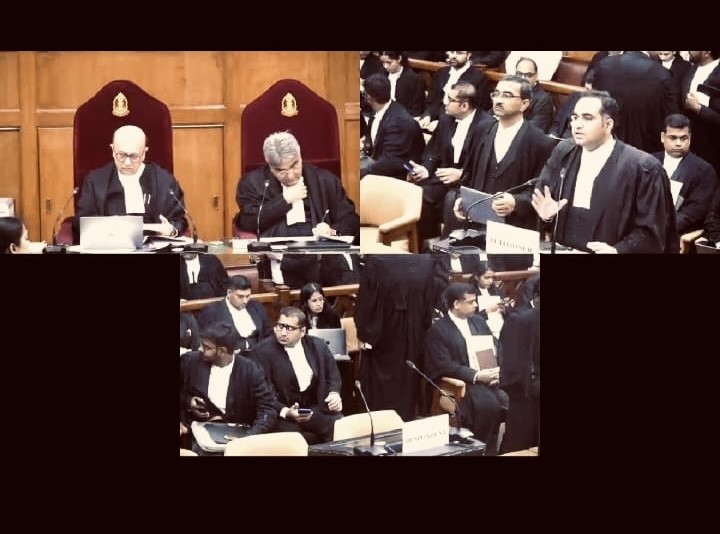
The most authoritative pronouncement came in the case of:
Avishek Goenka v. Union of India & Ors., [(2012) 5 SCC 760]
In this case, the petitioner raised serious concerns over criminal activities being conducted inside vehicles with heavily tinted windows, thus hampering police surveillance and increasing threats to public safety, especially for women and children.
Key Directions of the Supreme Court (Judgment dated 27 April 2012):
- Absolute prohibition on use of black films on any vehicle, irrespective of the percentage of visual light transmission.
- Only manufacturer-fitted tinted glass, complying with Rule 100 CMVR, is permitted.
- Traffic police and enforcement agencies directed to take strict action, including removal of film and imposition of fines.
- The order came into effect from May 4, 2012.
Read full judgment here: Avishek Goenka v. Union of India – Indian Kanoon
Practical Implications for Vehicle Owners
Since the judgment, thousands of vehicle owners have been fined, especially in metropolitan areas like Delhi, Chandigarh, and Mumbai. Traffic police often conduct routine checks and use light transmission meters to detect violations.
Impacts on Daily Life:
- Enhanced Public Safety: Visibility inside vehicles deters criminal acts and facilitates faster police response.
- Reduced Crimes Against Women: Many cases of assault and kidnapping were found to involve cars with dark window tints.
- Inconvenience for Owners: Owners of luxury vehicles often claim reduced privacy and protection from sun glare.
- Economic Impact on Accessories Market: The ban significantly affected the aftermarket film industry.
Can Sun Control Films Still Be Used?
No, aftermarket sun control films of any grade or transparency level are banned. However, UV-protective glass or tinted glass built into the vehicle by the manufacturer is allowed, provided it complies with Rule 100 CMVR.
Violation and Penalty
Under Section 177 of the Motor Vehicles Act, violation of this rule is punishable with:
- Fine up to ₹100 for the first offence, and
- Up to ₹300 for subsequent offences, or even vehicle impoundment in serious cases.
Many state governments and city police departments have issued separate notifications and enforcement drives based on the Supreme Court’s directions.
Conclusion
While the use of black films may offer a sense of privacy and comfort to vehicle owners, public safety and security concerns far outweigh these conveniences. The Supreme Court’s 2012 judgment stands as a clear reminder that laws must evolve to serve the greater good of society.
As a responsible citizen, it’s essential to comply with the law, understand the rationale behind such bans, and contribute to a safer public environment.
+919463742964, advanoopverma@gmail.com